
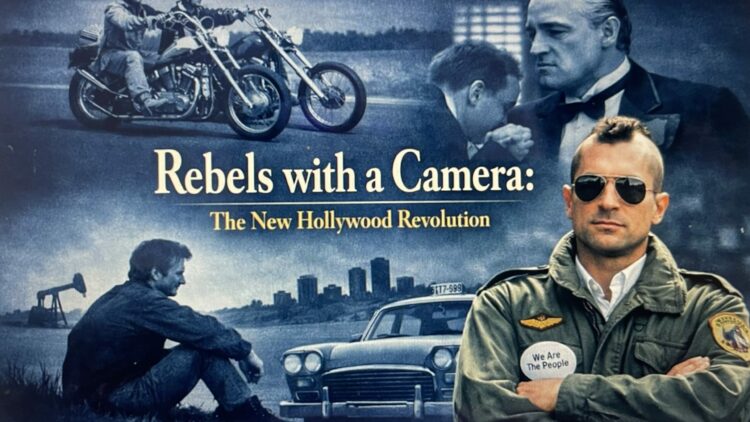
As post‑war America faced new freedoms and uncertainties, directors such as Peter Bogdanovich, Martin Scorsese, Francis Ford Coppola, Brian De Palma, Michael Cimino, William Friedkin, and Bob Rafelson created films that balanced idealism with excess, community with alienation, and optimism with the hard truths of a changing world.
Tracing the transition from Old Hollywood to New Hollywood, we examine how cinema captured the energy of the counterculture, responded to events like Woodstock and Watergate, and reflected Americans’ efforts to reimagine gender roles, marriage, family, and identity.
Through these films, students discover how a generation of cinematic rebels transformed the screen—and reshaped the stories Americans tell about themselves